
How we look after your child
Sending a child to board is a decision about trust, so this page sets out what actually exists rather than what we would like you to feel. A health centre with a qualified nurse and four beds. A child protection and grievance procedure written against the POCSO Act. Fire drills every term. Buses checked before and after every trip. A published list of what students may not bring.
Most of what follows is drawn from the school’s own policy documents, each of which is published in full. Where we do not yet publish something you would want, we say so.
If your child is unwell
The school has its own nursing station with four beds, staffed by a qualified nurse. Every student’s health information is recorded before they move in and kept updated; parents are asked to tell the school about any allergies and to contact the nurse whenever there is new medical information.
When a student comes to the infirmary the nurse records the symptoms and the site of any injury, takes vitals — pulse, blood pressure and oxygen saturation — and decides whether hospital admission is needed. If it is not, medicine is prescribed after a teleconsultation with the doctor, recorded in the student’s health file and on the school ERP, and the child is monitored daily until recovery.
If hospital treatment is needed, a member of staff escorts the child — immediately where the situation calls for it, otherwise after classes at 4pm. The nearest hospitals to the campus are SSIMS and Bapuji Hospital. Parents may ask for a different hospital, though the school decides the destination according to the situation.
When you will be called
You will be notified if your child is injured or taken ill. To avoid causing unnecessary alarm, a small injury or a bout of seasonal flu or mild illness may not be reported to you. In a medical emergency you are contacted as soon as possible; if you cannot get there, the nurse or a member of staff goes with your child to hospital and you meet them there.
Medication
Prescription medicine is handed to the nurse with a completed medication authorisation form, and must arrive in a sealed envelope with the doctor’s dosage requirement. A new form is needed each time the dose or the timing changes. Students are encouraged to take regular prescribed medication themselves under staff supervision; buying medicine over the counter is discouraged, and nobody may medicate themselves or anyone else.
The full infirmary and nursing policy (PDF) sets out the rest, including what happens during a prolonged illness.
Emotional support
The school has a student counsellor and a career counsellor, both trained in their field. Counselling records are confidential between the counsellor and the student — with one stated exception: if a student’s welfare or safety, or anyone else’s, is judged to be at risk of significant harm, the student is told first that the necessary information will be passed to the Dean.
A student identified with learning or behavioural difficulties is referred to the counsellor for their section, under the school’s inclusion and special education needs policy. A counsellor’s report is sent to parents on request.
Read the counselling policy (PDF).
Every child has one adult who knows them
The school runs Snacks with Mentor: a mentor teacher is allotted five students for regular informal sessions. A 1:5 pastoral ratio is unusual in a school of this size, and it is the mechanism by which a child who is struggling gets noticed before anyone has to file a report.
In the boarding houses the line of responsibility runs from the Chief Warden to a block warden, an assistant warden and a hostel assistant, and the child protection policy is explicit that a child may raise a concern with any adult they feel comfortable approaching, rather than a set person.
Anti-ragging, child protection and grievances
The school’s child protection, sexual harassment and safeguarding policy is written against four instruments: the United Nations Convention on the Rights of the Child, the POCSO (Protection of Children from Sexual Offences) Act 2012, the Government of India guidelines for the prevention of bullying and ragging in schools issued on 8 November 2016, and the Juvenile Justice (Care and Protection of Children) Act 2015. It defines four categories of abuse — physical, sexual, emotional and neglect — and applies to staff, students, parents and visitors alike.
Staff in the boarding section are required to be particularly vigilant that students are protected from bullying and ragging of any kind, and any incident must be reported to the counsellors, the Principal or the Dean immediately. A child is free to report to any adult they find it comfortable to approach.
How a complaint is handled
A student complaint goes to the Child Protection Committee, whose leadership team includes the Dean, the Principal, the counsellor, the safety officer, the nurse, the warden, the class teacher and student representatives. The committee keeps a register, holds the complainant’s name and the contents of the complaint in confidence, and meets the complainant within three days of receiving the complaint.
The respondent is given a copy of the complaint and an opportunity to answer it. An inquiry follows, which may include examining witnesses, cross-examination, defence witnesses and a site inspection. The committee then reports to the senior management team, which decides what action to take — ranging from a warning, a written apology or a bond of good behaviour through to suspension and a recommendation for expulsion. The policy is explicit that at no point should the student making an allegation be scapegoated, and that the parents of a child making an allegation are contacted and involved.
Read the child protection, sexual harassment and safeguarding policy (PDF) and the discipline and student code of conduct policy (PDF), which sets out how bullying, teasing and cyberbullying are dealt with and what the consequences are.
Physical safety on campus
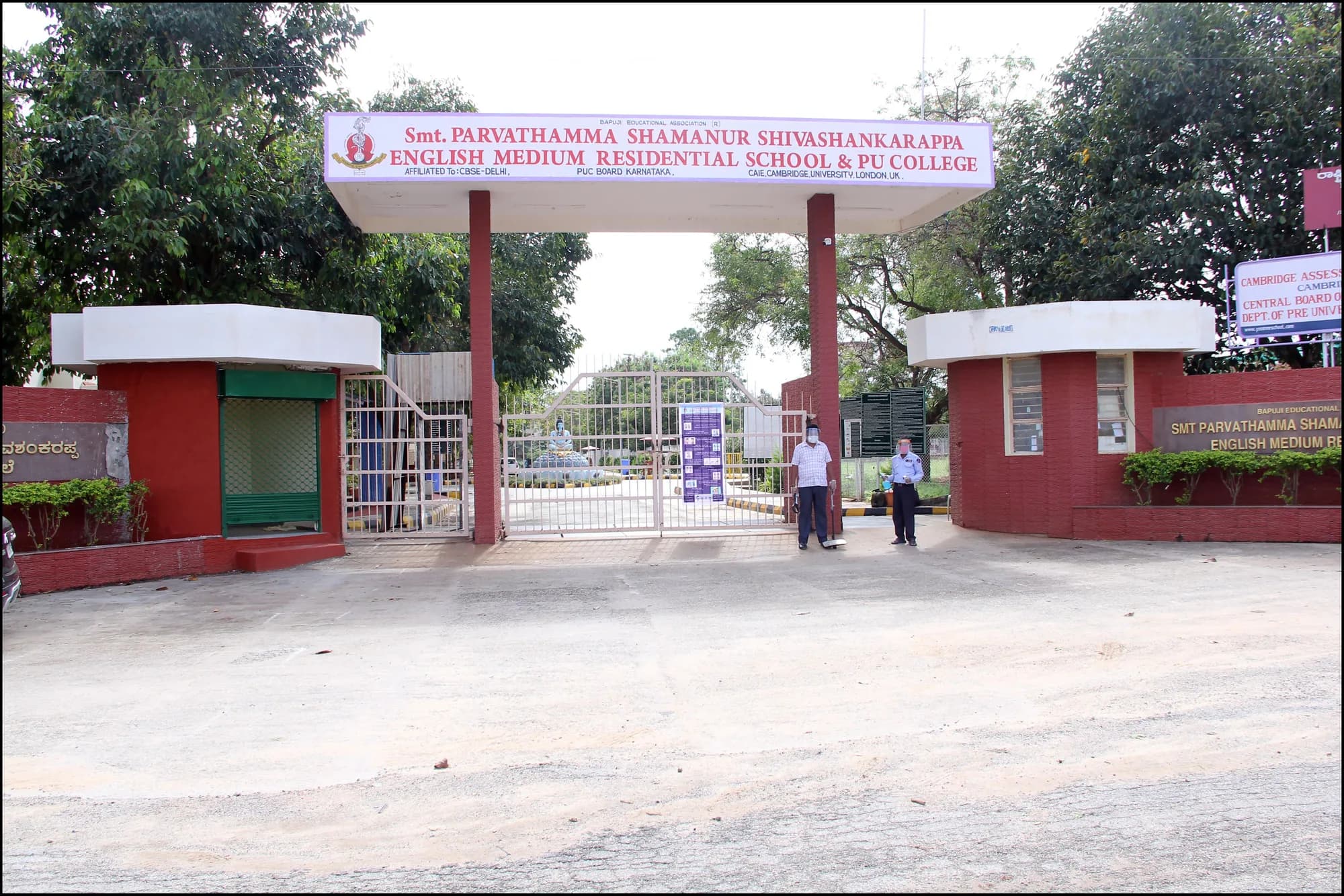
- CCTV, locked doors and a signed-in campus. The safety policy treats prevention as its first phase: cameras are installed, doors are locked during the school day, and every visitor signs in. A safety officer and a security officer hold those responsibilities.
- Restrooms inside the dormitories, so no student crosses a dark campus at night. Each hostel runs three floors, two blocks to a floor, five dormitories to a block and four students to a dormitory.
- 24-hour power backup, on diesel generators with UPS where it is needed.
- Water purification plants supplying drinking water from taps on every floor, inspected on a regular cycle, with a softener plant serving the campus. The school’s water, health and sanitation certificates are published.
Visitors
Every visitor reports to main gate security first — no one is admitted through any other entrance under any circumstances. Visitors state the purpose of the visit and who invited them, and must be ready to produce formal identification. Staff hosting a guest need approval before the visit. Failure to follow the procedure can mean being escorted off the site.
Read the school visitor policy (PDF) and the hostel SOP (PDF).
What students may not bring
The school publishes a list, and it is enforced. It covers:
- Weapons and replicas; blades and tools; sports equipment that could be used as a weapon; ammunition and firearms; martial arts and self-defence items
- Drugs, cigarettes, alcohol, pan, gutka, medicines without a prescription, steroids and banned protein supplements
- Cell phones and electronic devices
- Outside food and beverages
A published restricted-items list is rare in this market. It matters less as a rule than as a signal: the school has thought about what it does not want on campus and written it down.
Getting to and from school safely
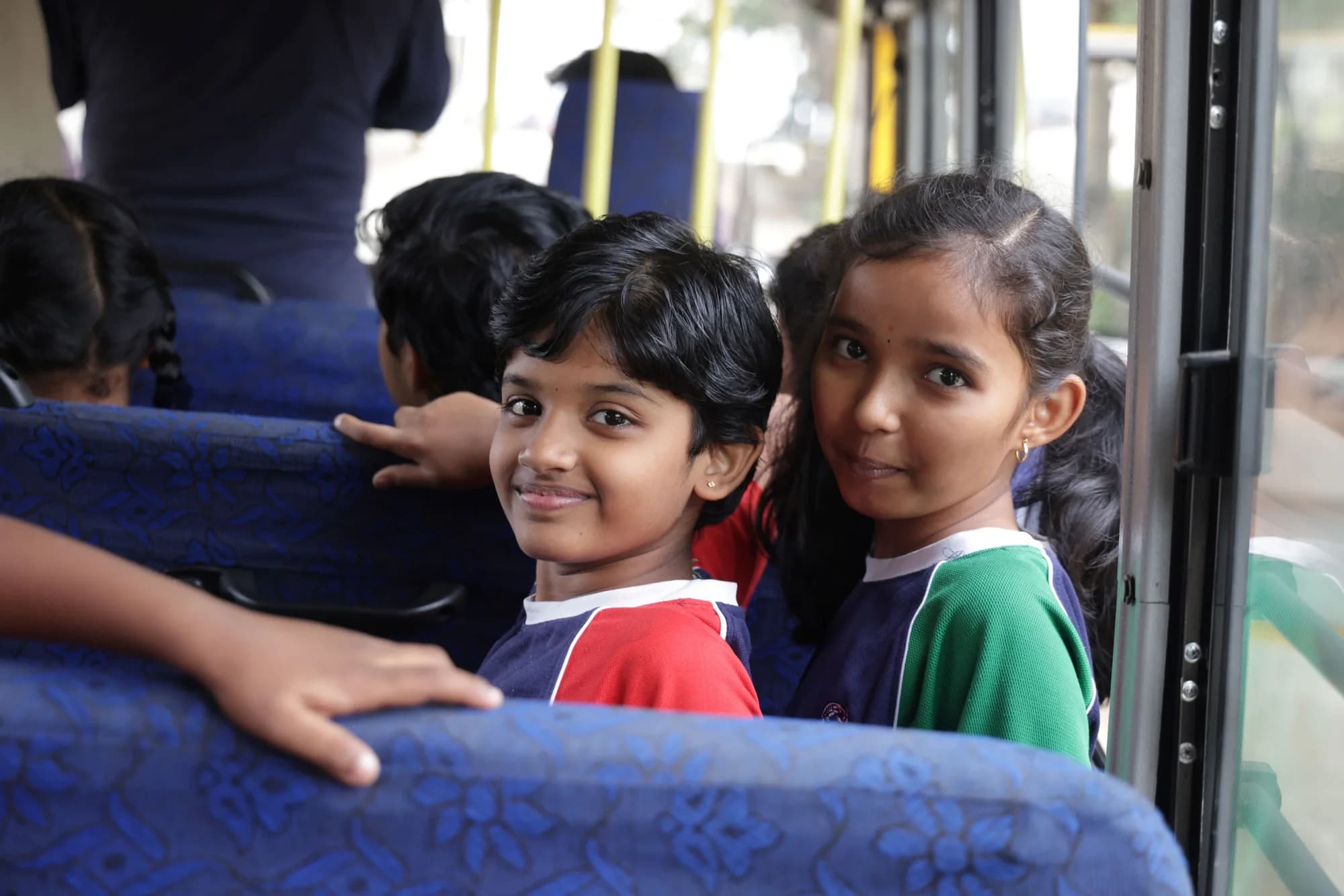
Every school bus carries an attendant alongside the driver, and their duties are written into the agreement the school holds with its transport provider. Before and after every trip the bus is inspected against a checklist that includes the speed governor and its sensor, CCTV, the GPS device, seats and seat belts, brakes, the first aid kit and the fire extinguisher, and the result is recorded.
Any bag, bottle or backpack found during the pre-trip inspection that cannot be matched to a student or staff member is treated as suspicious and reported immediately. Students must wear seat belts and stay seated while the bus is moving, bullying of any kind is prohibited on board, and complaints can be registered with the teacher in charge.
Read the transport policy (PDF).
Emergency preparedness
The school’s safety plan works in four phases — prevention, detection, response and recovery. Fire drills are held in line with local fire codes and no less than once a term, as an exercise to familiarise everyone on campus with evacuation. Staff, students and parents are trained on cyberbullying, sexual harassment, POCSO and internet usage, and drills cover fire evacuation, earthquake and lockdown.
In an emergency the Principal is responsible for communications — to everyone on campus, to emergency responders and state and local agencies, and to parents. A campus safety committee runs periodic inspections covering buildings, the swimming pool, water tanks, fire extinguishers and the bus fleet, and drivers and kitchen staff undergo periodic medical tests.
The school’s fire safety certificate from the competent authority is published, alongside its fire prevention and extinguisher policy (PDF).
Common questions
Is there a doctor on campus?
There is a nursing station with four beds and a qualified nurse. Medicine is prescribed after a teleconsultation with the doctor, and a child who needs hospital treatment is escorted to SSIMS or Bapuji Hospital.
What is the school’s anti-ragging policy?
Ragging and bullying of any kind are prohibited, under a published child protection policy written against the Government of India’s 2016 guidelines on preventing bullying and ragging in schools. Boarding staff are required to be particularly vigilant, and any incident goes to the counsellors, the Principal or the Dean immediately.
Who do I contact if I have a complaint?
Complaints about a student’s welfare go to the Child Protection Committee, which must meet the complainant within three days. In the first instance, contact the school office.
What if my child has an accident during sport?
The same route as any injury: the nurse assesses and records it, treats it where she can, and escorts the child to hospital where that is needed — immediately if the situation calls for it. You are notified unless the injury is a small one.
Can my child keep a phone for emergencies?
No. Phones are on the restricted list. Every boarder gets a scheduled weekly call home at no charge, and you can reach the school directly at any time.
Is the drinking water safe?
Purification plants supply taps on every floor, inspected on a regular cycle, with a campus-wide softener plant, and the school’s water, health and sanitation certificates are published.
Ask us the hard questions
The most useful campus visit is one where you ask the warden and the nurse whatever is worrying you. We would rather answer it now than have you wonder later. The rest of residential life is covered in a boarder’s day, what boarders eat and boarding at PSSEMR.