
Admissions open for 2027–28 · Ages 3 to 5
Kindergarten in Davangere: Nursery, LKG and UKG at PSSEMR
Mornings from 9:30am to 12:30pm for children aged three, four and five, in classrooms rebuilt in 2023 with digital boards, a library of their own and a Montessori Lab – on the same campus as the CBSE school your child can continue into.
- Nursery 3 · LKG 4 · UKG 5
- 9:30am to 12:30pm
- Montessori Lab and digital classrooms
- 2027–28 fee: ₹50,000 a year
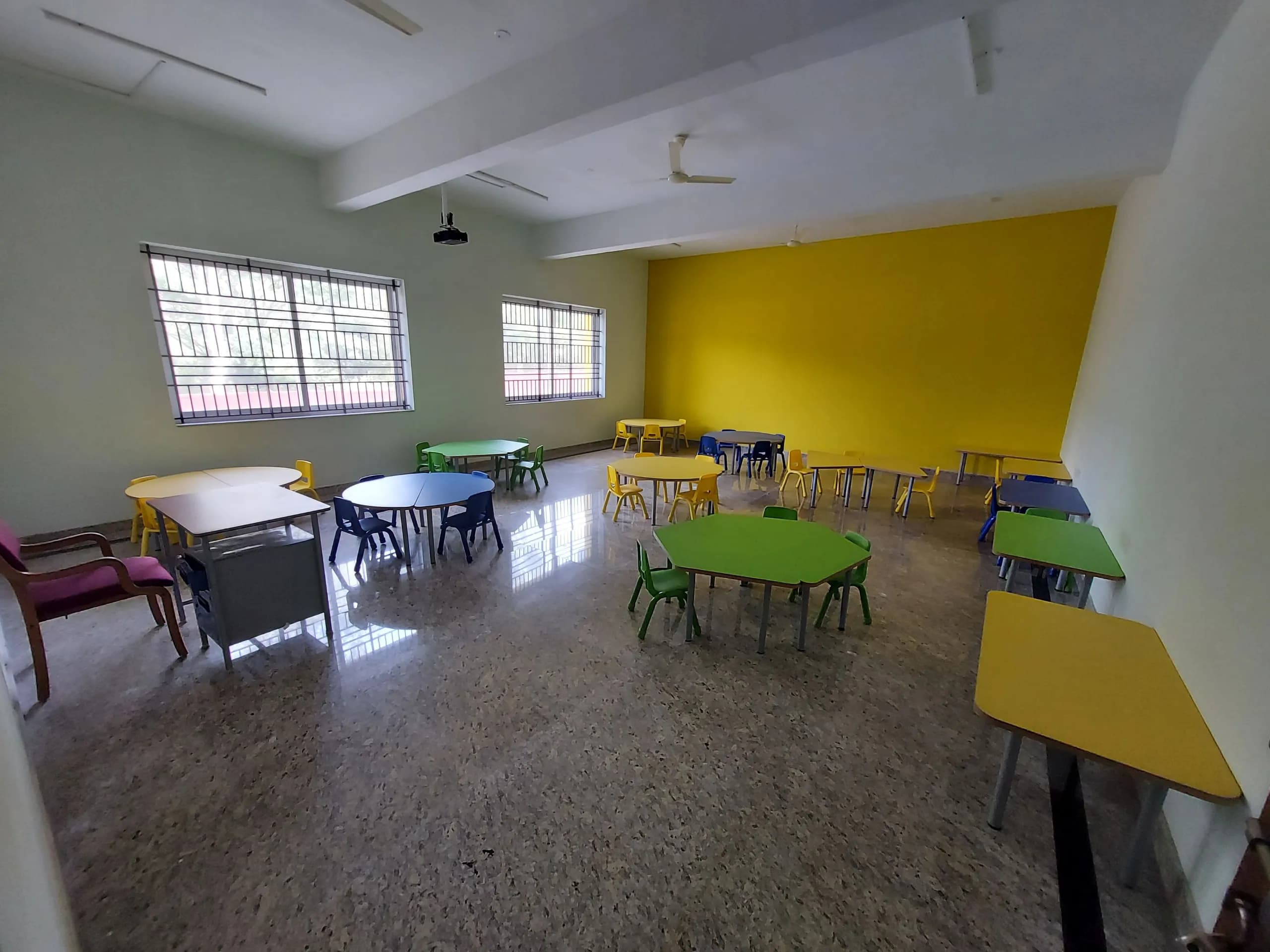
PSSEMR kindergarten at a glance
| What you need to know | |
|---|---|
| Classes and ages | Nursery (age 3), LKG (age 4), UKG (age 5), counted as at June, when the session starts |
| Hours | 9:30am to 12:30pm, with a short break from 10:00 to 10:15am |
| How children learn | Play-based, with a Montessori Lab for sensorial and practical-life work |
| Classrooms | Expanded in 2023: digital boards, a kindergarten library and motor-skills play equipment; a separate play area |
| Class size | 30 children, with one teacher and two helpers in the room |
| Fee (2027–28) | ₹50,000 a year for Nursery, LKG and UKG |
| After UKG | Class I of the CBSE school, on the same campus |
Which class for your child’s age
| Class | Age |
|---|---|
| Nursery | 3 years |
| LKG | 4 years |
| UKG | 5 years |
Ages are counted as at June, when the new session starts: a child joining Nursery in 2027–28 should be three by June 2027.
Looking for a playgroup? The youngest class at PSSEMR is Nursery, for three-year-olds.
A kindergarten morning
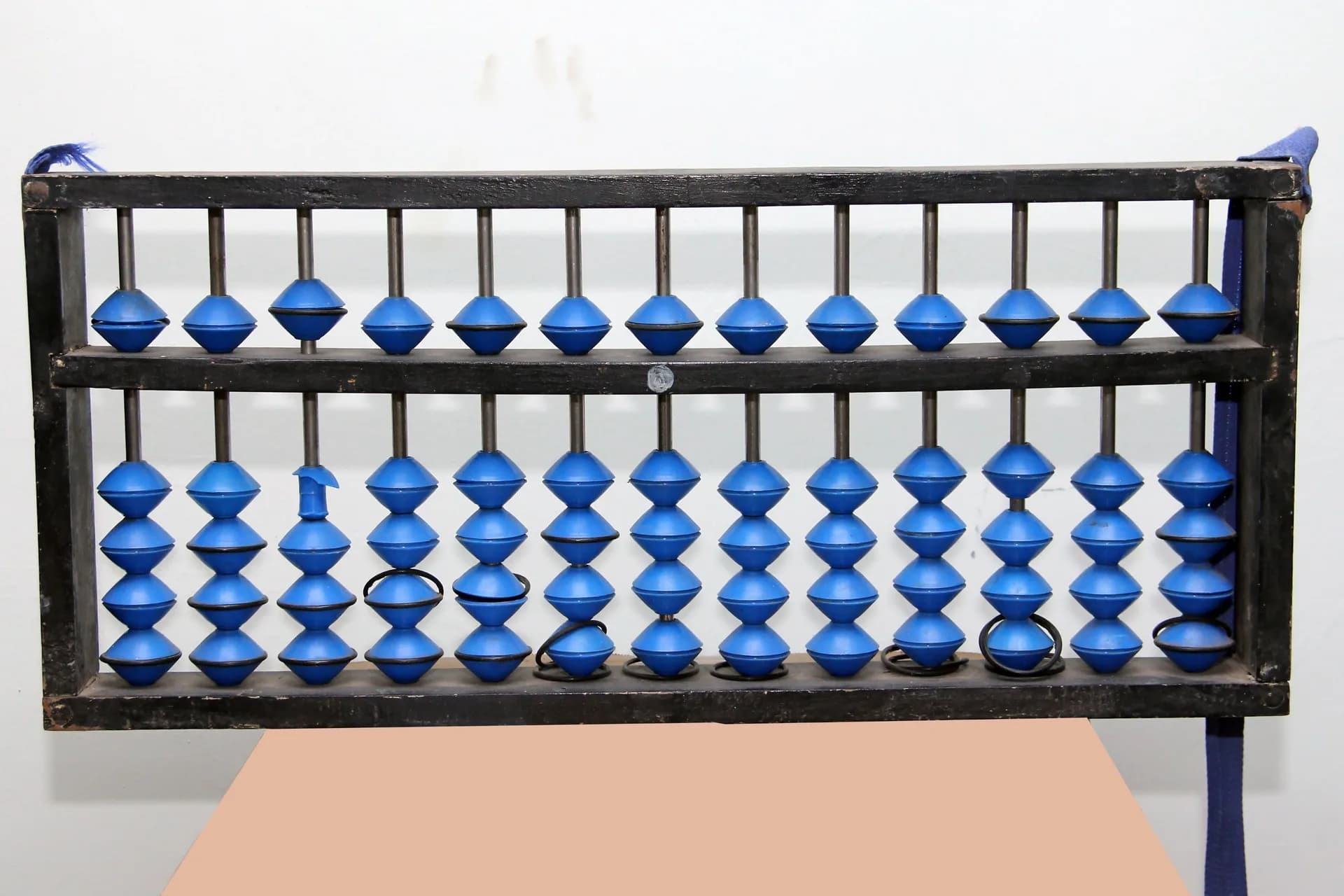
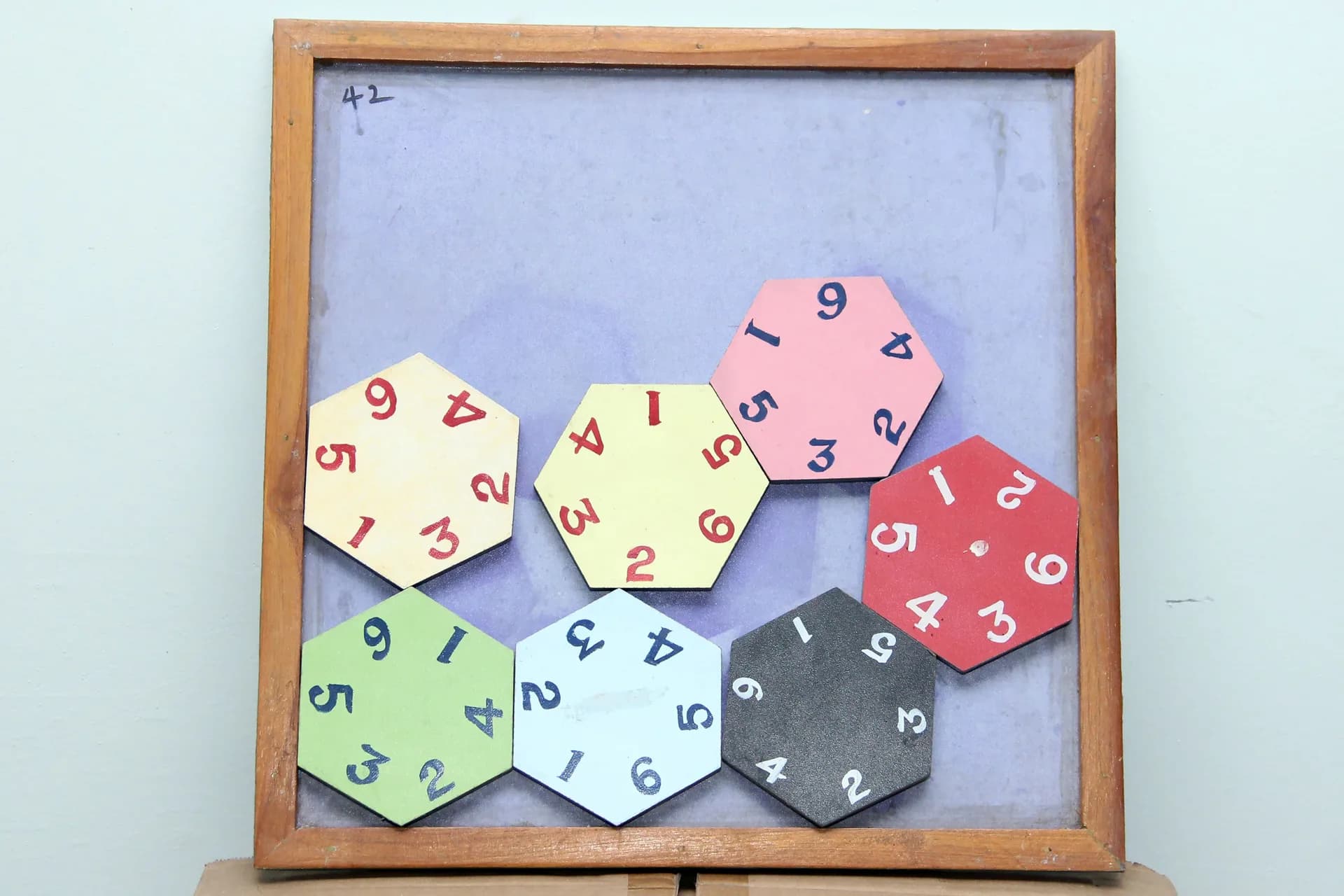
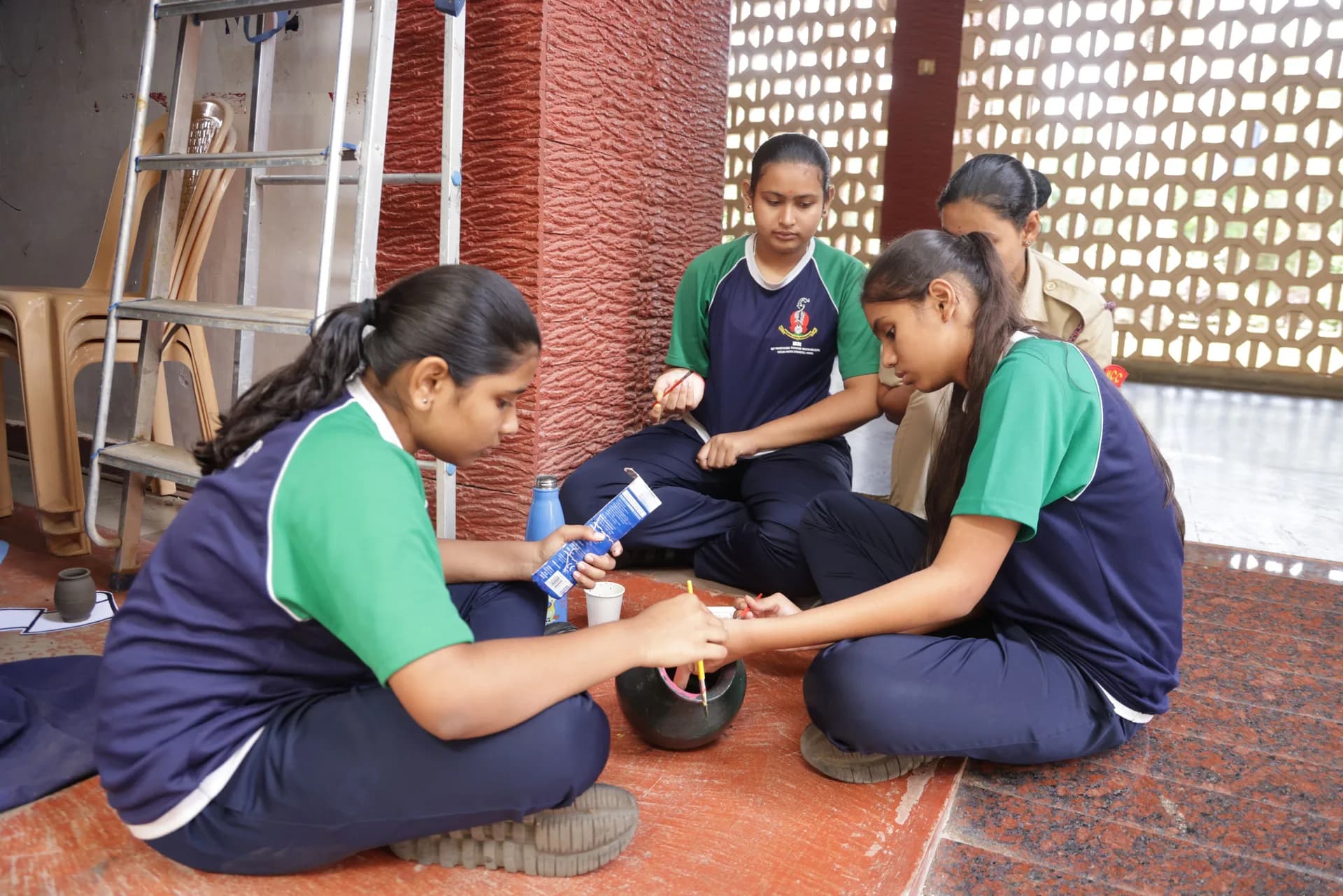
Kindergarten is a morning programme. It runs from 9:30am to 12:30pm, with one short break.
| Time | What happens |
|---|---|
| 9:30am | Kindergarten starts |
| 10:00–10:15am | Short break |
| 12:30pm | Kindergarten ends; children are collected or go home |
Nursery, LKG and UKG are taught as separate classes, each with its own teacher and two helpers. Only a parent may collect a child – either from the school or at the bus drop point.
The morning has its own routines, and these are part of every morning: the Good Morning Circle, the Mystery Corner, the Pandora Box, the Reading Corner, a Nature Walk, the Montessori Lab and the Bye Bye Circle.
Snack and food: food is included in the kindergarten fee.
What children learn
Learning at this age is not split into subjects, but it does have a shape. Each area is taught through talk, objects, play and movement.
| Area | What it includes |
|---|---|
| Language | Speaking, action sounds, reading and the library |
| Early numeracy | Mathematics through objects and play |
| Writing | Writing and colouring |
| Art and making | Art and craft |
| Music and movement | Music and dance |
| Physical | Physical education and yoga |
| Social | Group games, celebrations and festivals |
Play-based, with a Montessori Lab
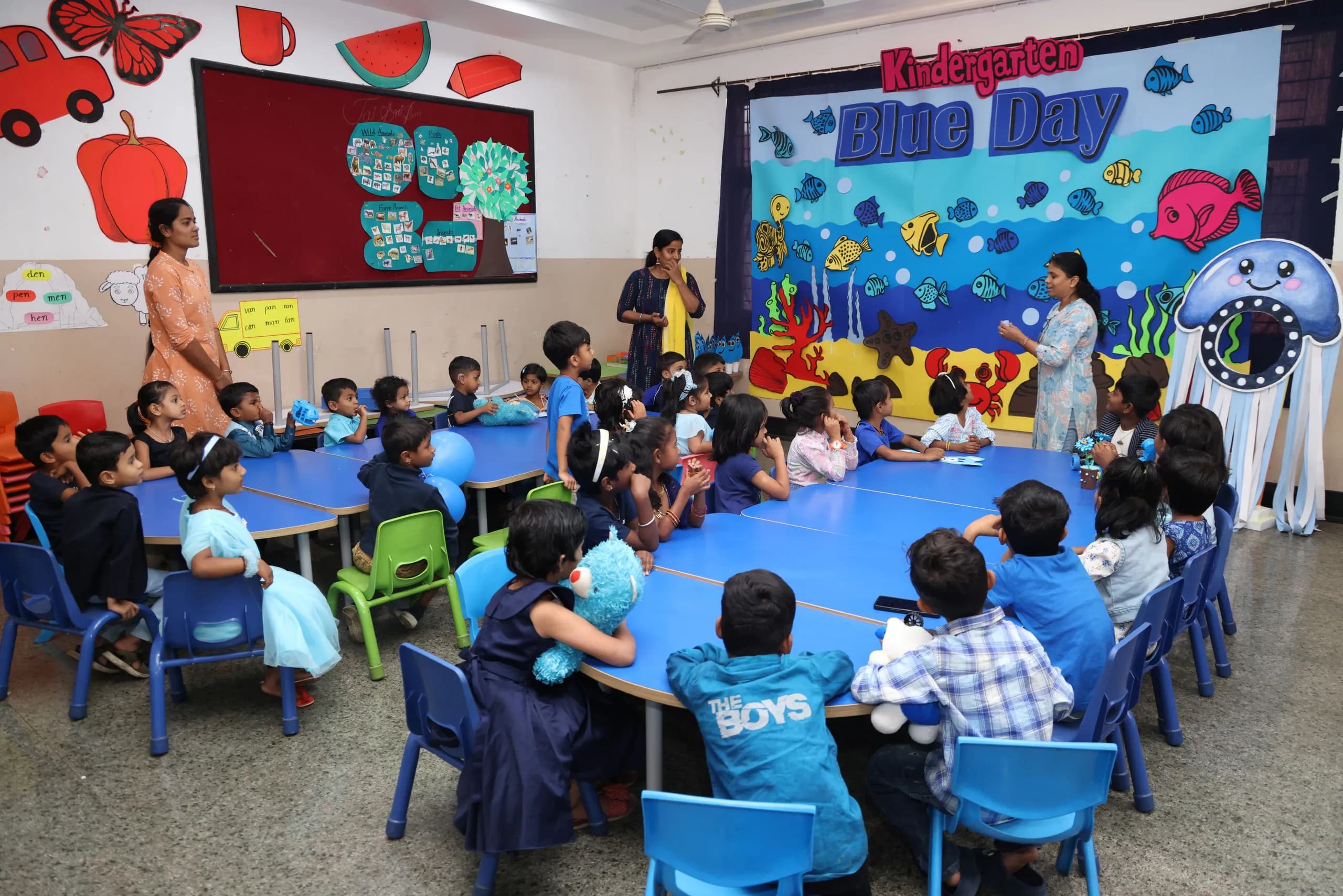
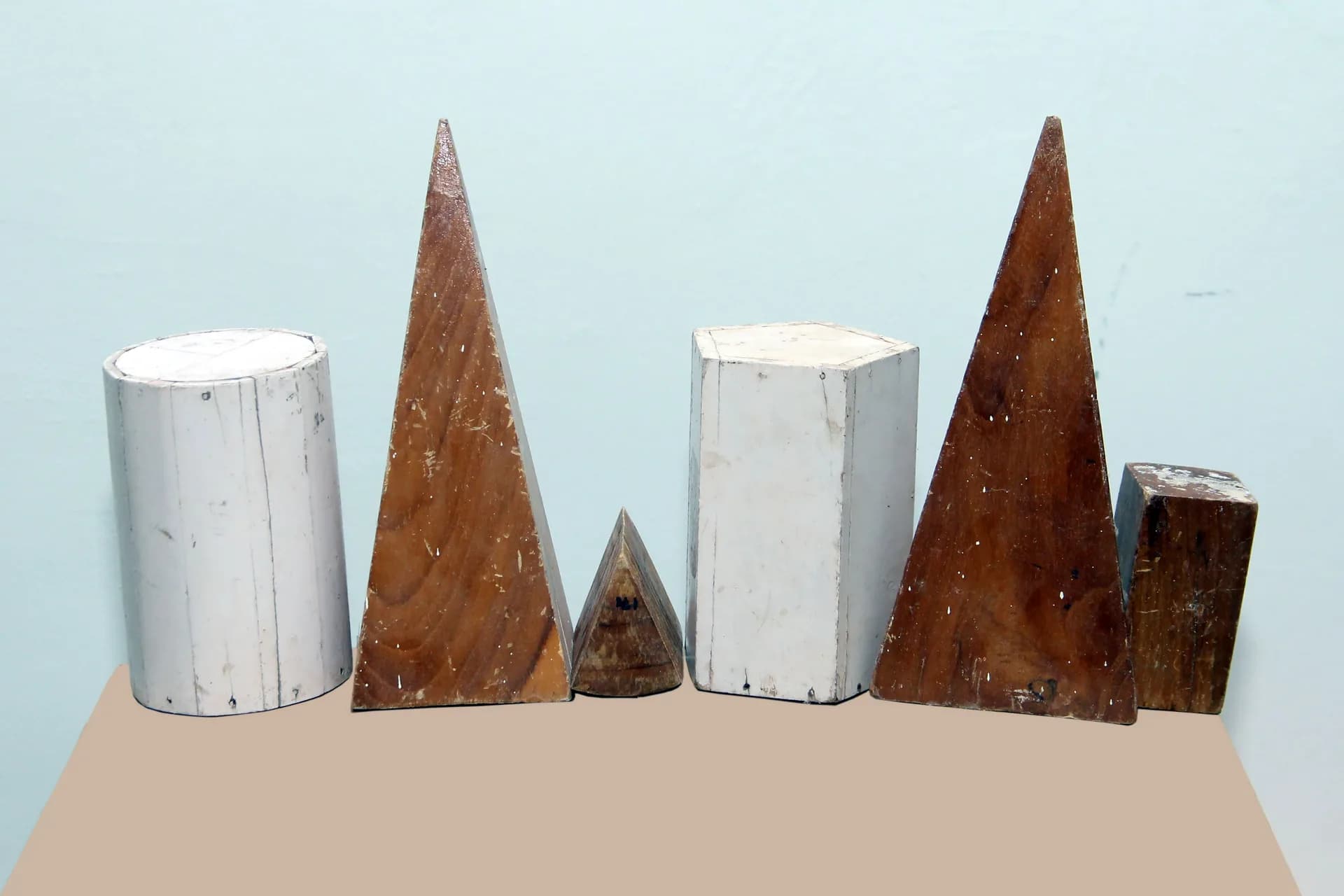
Every child develops at a different pace, so the programme is built around play. Alongside the classrooms, a Montessori Lab gives children a room of Montessori materials for sensorial work (materials that train touch, sound and sight) and practical-life work (everyday tasks that build independence).
PSSEMR is a play-based kindergarten that uses a Montessori Lab, and its kindergarten teachers are Montessori-trained.
The classrooms and play area
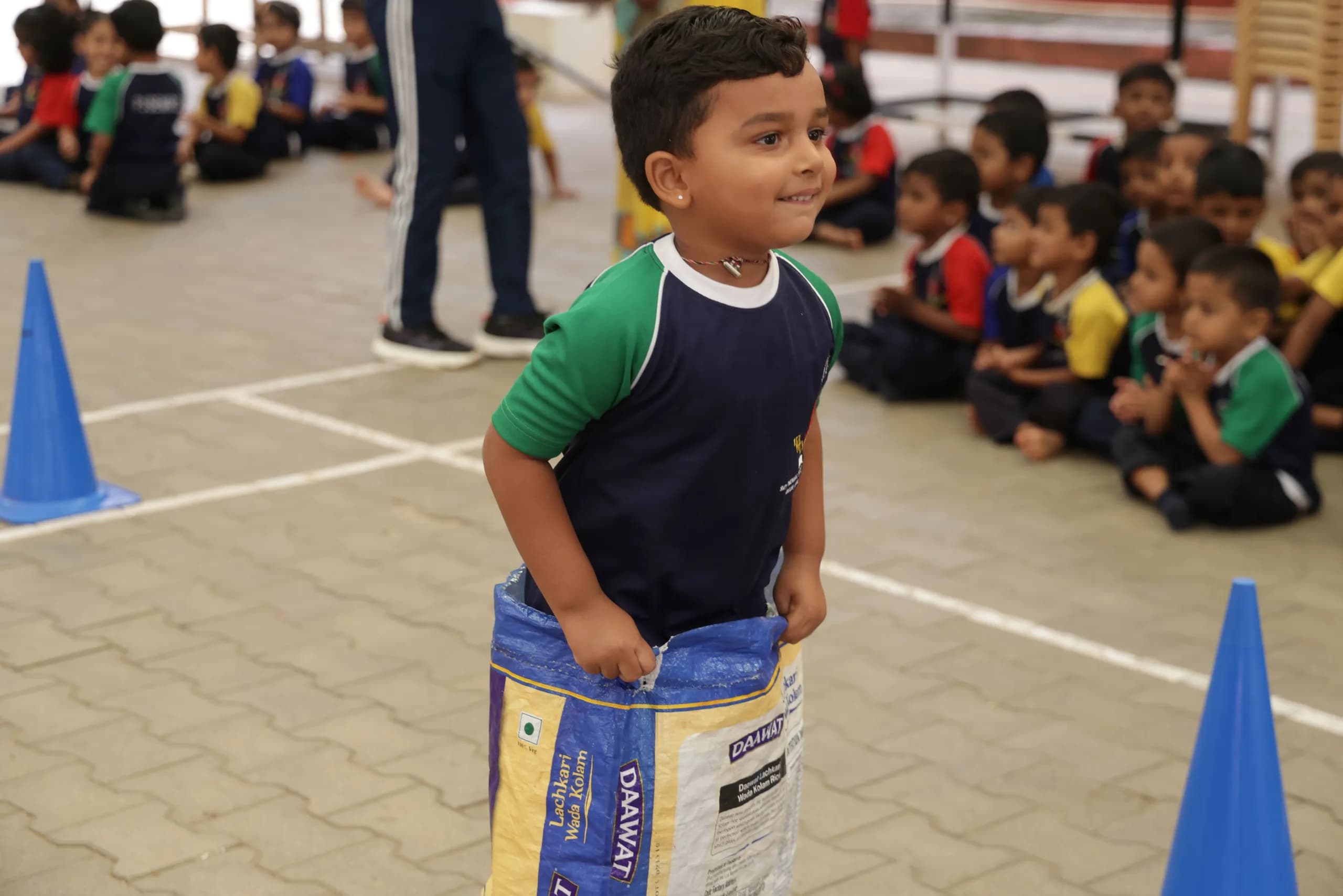
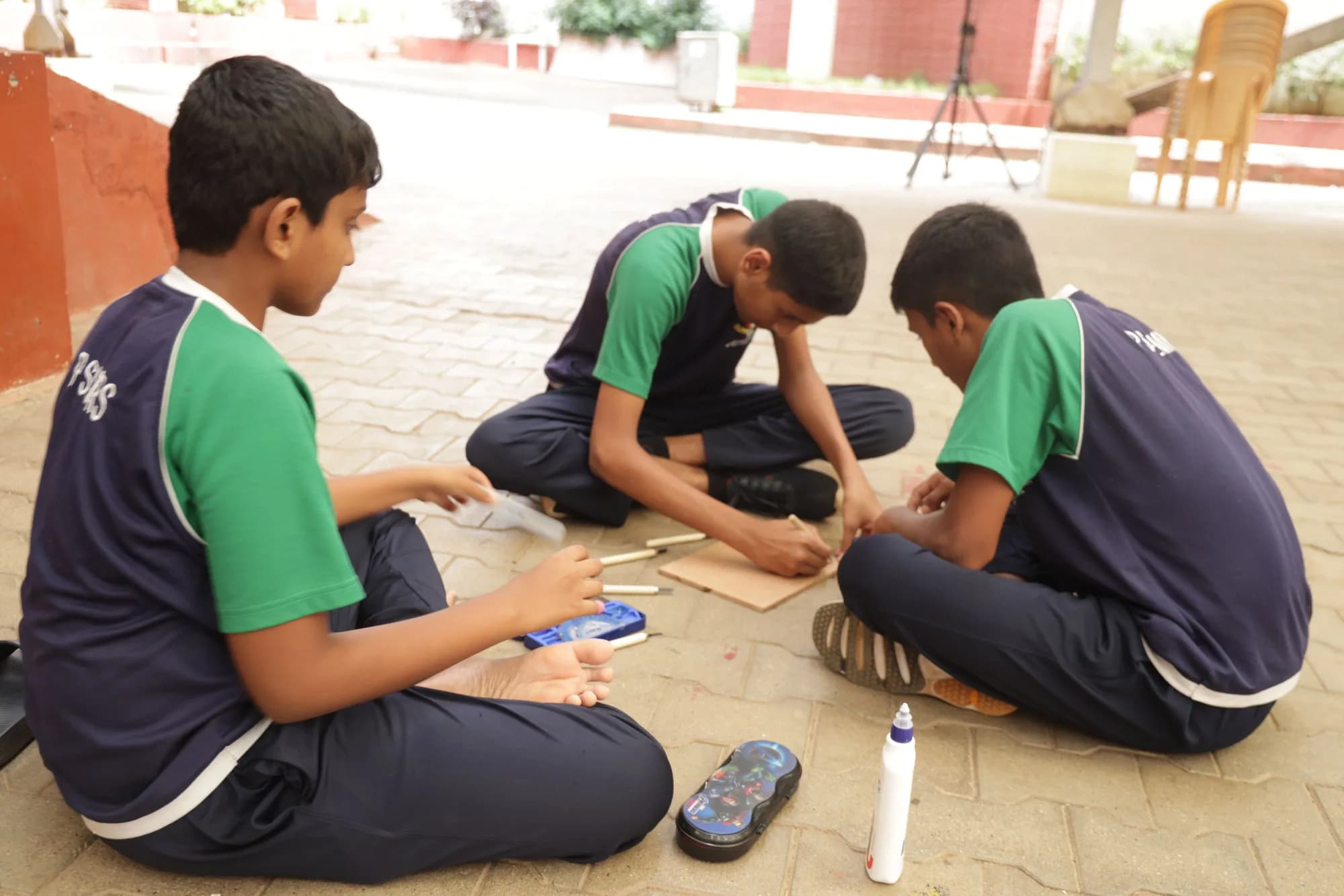
The kindergarten was expanded in 2023: bigger, brighter classrooms with digital boards, a library of its own, and play equipment chosen to develop both gross and fine motor skills. There is also a separate kindergarten play area.
How children are assessed
Continuously, and formally and informally, rather than through tests. Worksheets are completed and assessed from time to time, and the records build a picture of which skills and ideas a child has really grasped. Parents are told regularly how their child is getting on; the point is to build the child’s confidence, not to rank them.
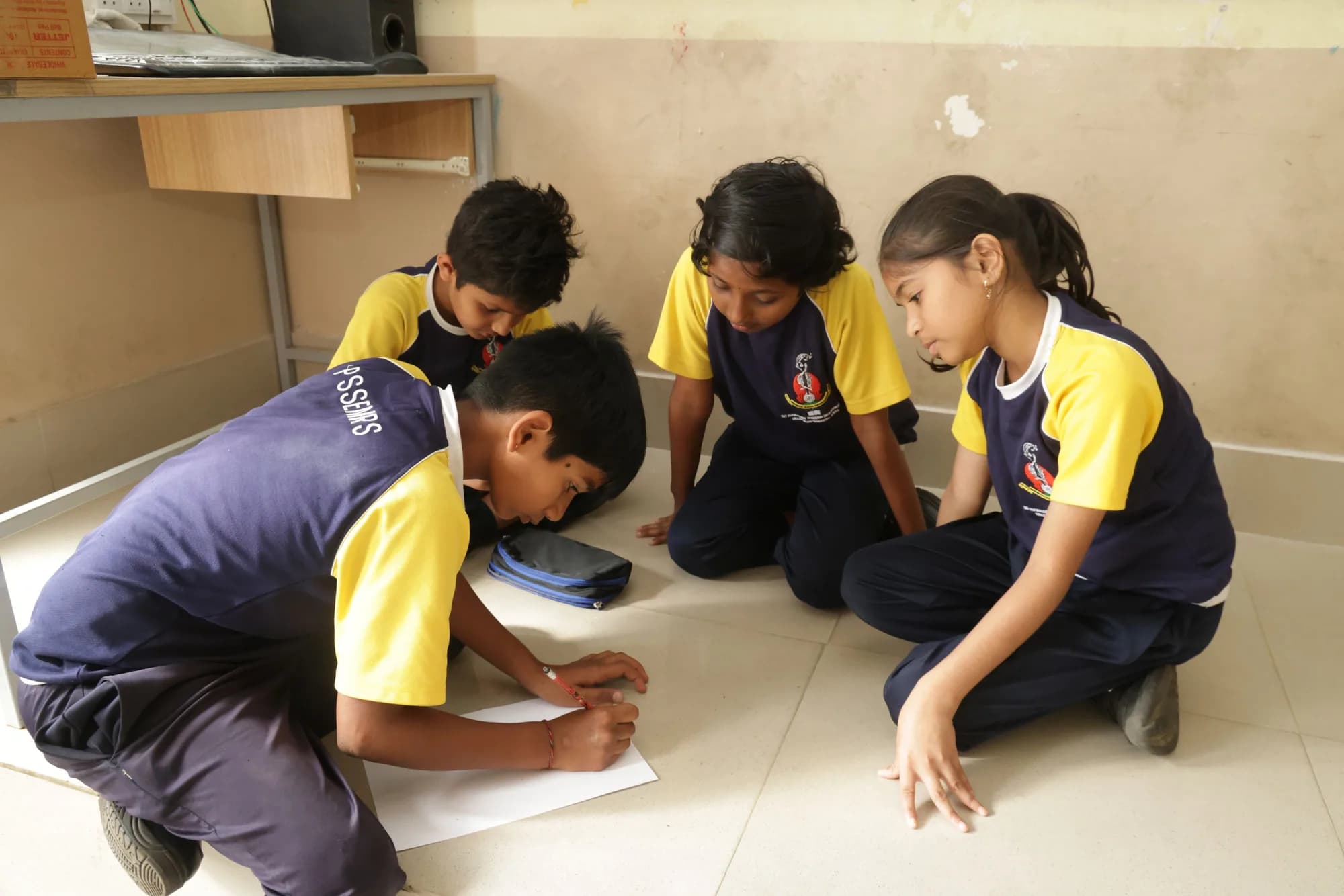
You hear from the school every day: the day’s classes are posted to the class WhatsApp group and recorded on the school’s ERP, so you can see what your child has been doing without waiting for a report at the end of term.
Safety and care for three- to five-year-olds
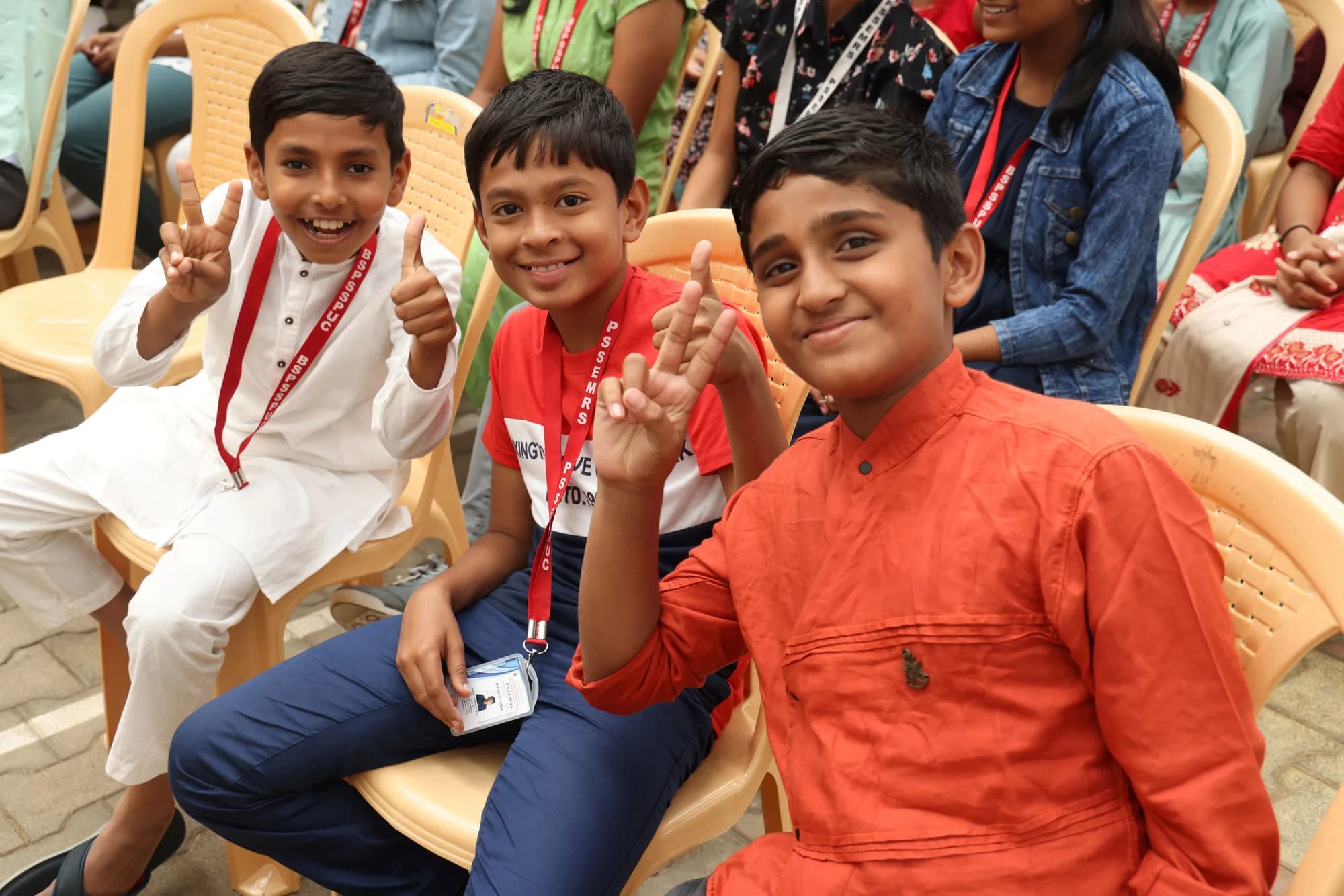
For a child this young, the questions that matter most are practical ones. The school’s answers for the kindergarten:
- Adults in each class: 30 children, with one teacher and two helpers.
- Collection: only a parent may collect a child – either from the school or at the bus drop point.
- Toilet help: the class helpers take children to the toilet and help them.
- If a child is hurt or unwell: the child is taken to the nurse on campus and you are called immediately.
Across the campus, there is a health centre with a qualified nurse; more than 300 CCTV cameras are monitored from a control room; visitors sign in at the main gate; and a Child Protection Committee meets anyone who raises a concern within three days.
Getting to kindergarten
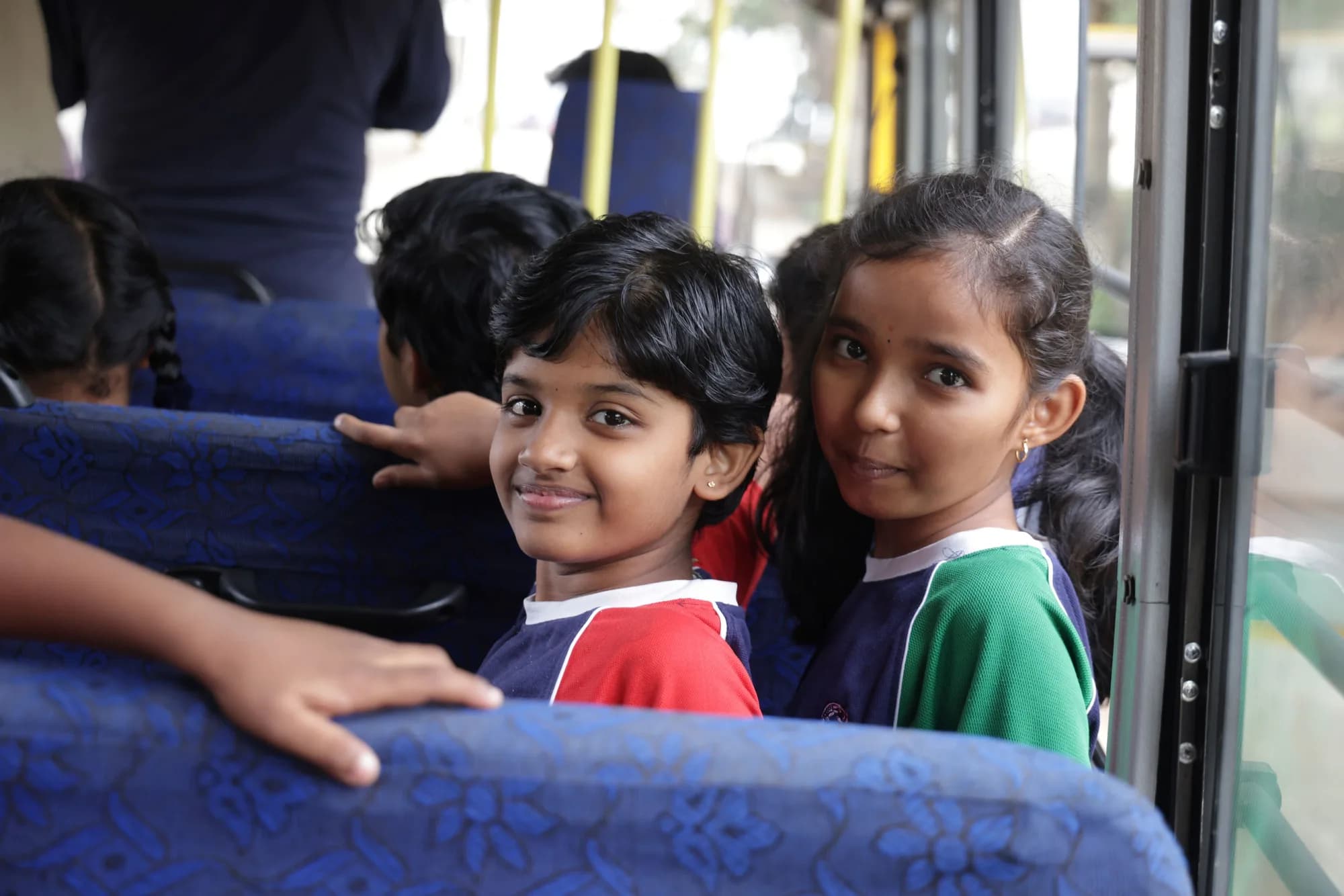
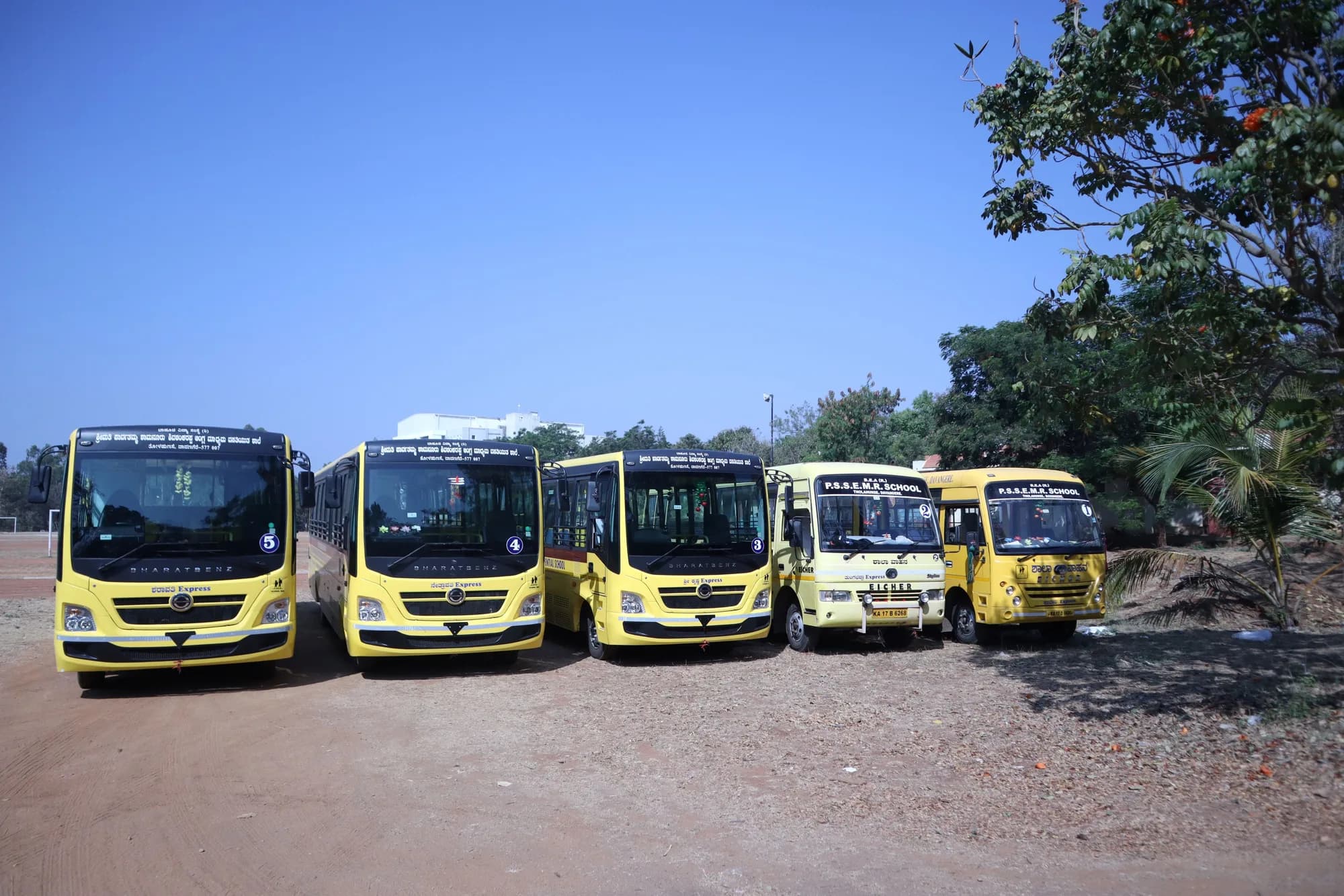
School buses run under the school’s transport policy with an attendant on every bus, and transport is charged by distance.
A bus serves the kindergarten finish, with an attendant on board to help the youngest children on and off. Transport is charged by distance: for 2027–28, ₹12,000 a year for up to 2km, rising to ₹35,000 for 25 to 30km. Only a parent may take a child from the drop point.
Kindergarten fees
| Item | Amount |
|---|---|
| Annual fee, Nursery, LKG and UKG | ₹50,000 |
| Food | Included in the annual fee |
| Uniforms, books and personal items | Charged separately |
| Transport | Extra, by distance |
70% of the annual fee is paid at admission and the rest by 31 August. Fees once paid are not refundable.
Payment details come only in the fee circular sent to admitted families. The school does not publish bank account details online – please do not act on payment instructions from any other source.
How to apply for kindergarten
Enquire
Use the form on this page, call or WhatsApp +91 9591917299, or visit the school office.
Meet the school
You meet the admissions department and look round the campus with them. There is no entrance test for a kindergarten place.
Documents
Birth certificate, Aadhaar, photographs and the medical form, plus the other items on the admissions list.
Confirm the place
Pay the admission instalment and collect the fee circular. Admissions for 2027–28 opened on 15 October 2026, so places are being taken now.
After UKG: Class I on the same campus
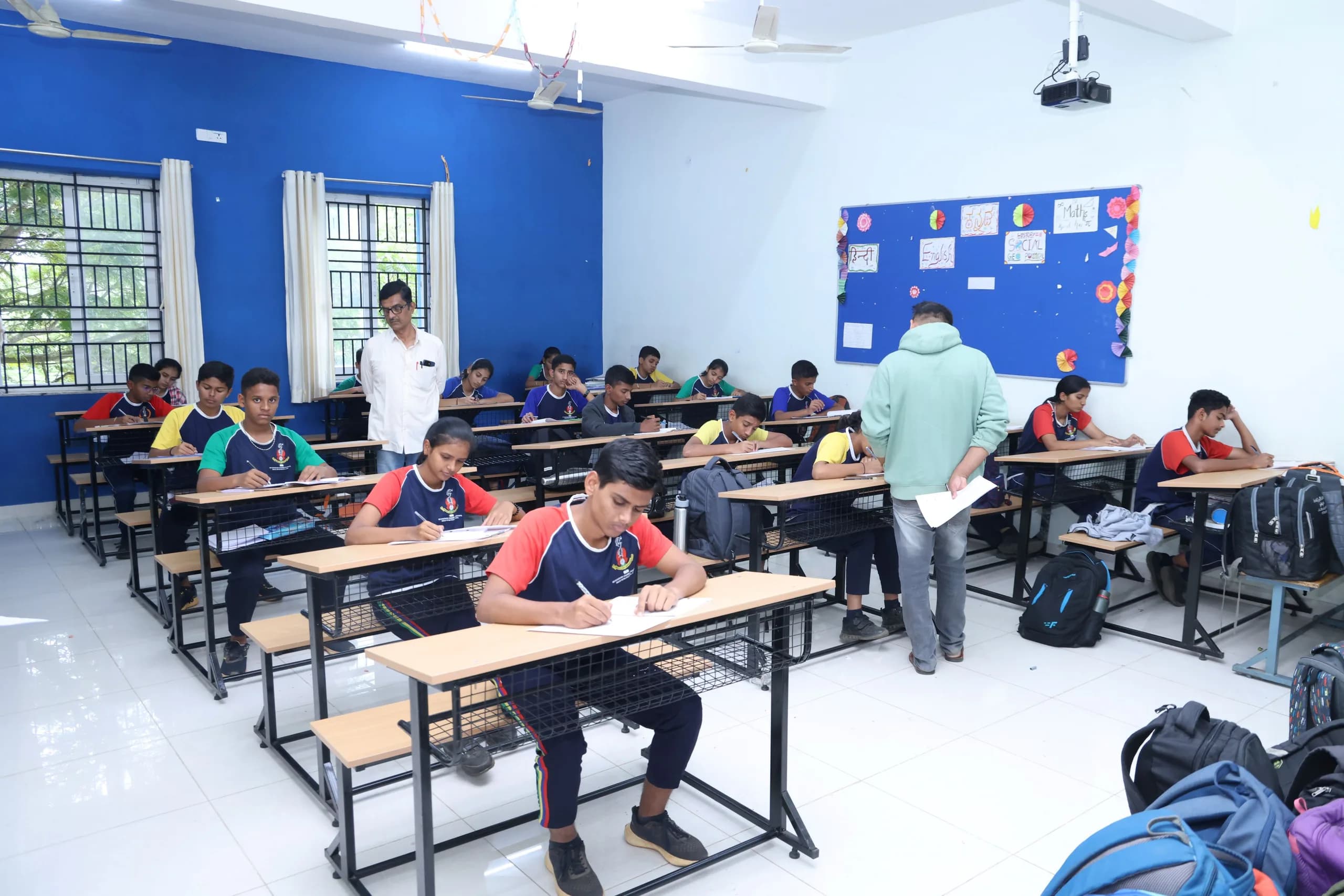
When your child finishes UKG, Class I of the CBSE school is on the same campus, with the same grounds. PSSEMR teaches CBSE from Class I to Class X, and a Cambridge school and PU College are on the campus too.
Moving up is a fresh admission rather than an automatic transfer, so talk to the admissions office during the UKG year about a Class I place.
Questions parents ask about kindergarten
What age can my child start kindergarten at PSSEMR?
Nursery at three, LKG at four and UKG at five, counted as at June when the session starts.
Do you have a playgroup?
The youngest class is Nursery, for three-year-olds.
What are the kindergarten timings?
9:30am to 12:30pm, with a short break from 10:00 to 10:15am.
Is PSSEMR a Montessori school?
It is a play-based kindergarten with a Montessori Lab, where children use Montessori materials for sensorial and practical-life work. The kindergarten teachers are Montessori-trained.
How many children are in a kindergarten class?
30, with one teacher and two helpers.
Is there a test to get in?
No. You enquire, meet the admissions department, look round the campus and then complete the admission.
Is food provided?
Yes – food is included in the kindergarten fee.
Is there a school bus for kindergarten?
Yes. A bus serves the kindergarten finish and an attendant helps the youngest children on and off. Only a parent may take a child from the drop point.
Does my child have to board?
No. Kindergarten is a morning programme, from 9:30am to 12:30pm.
Ask about a kindergarten place
Leave your number and the class your child will join. The admissions office will call you back during office hours about places, the admission step and a visit.